

Introduction
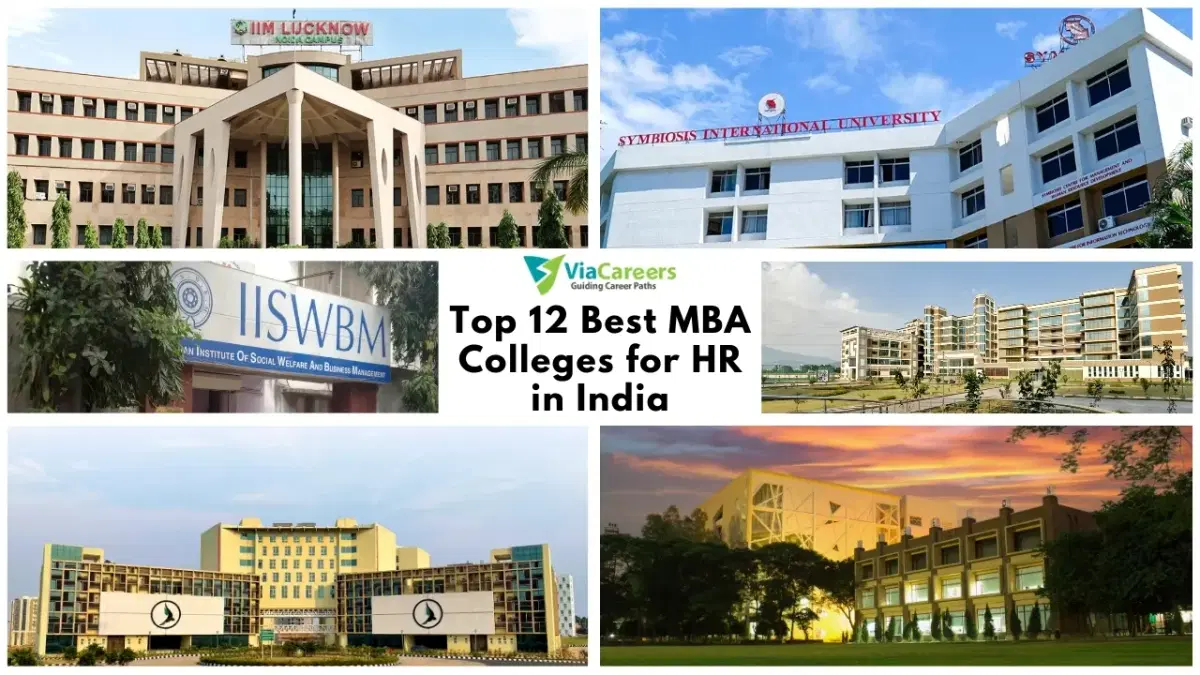
In today’s fast-changing business world, managing people is just as important as managing profits. Human Resource Management (HRM) plays a key role in driving organizational success through smart hiring, employee development, strong workplace culture, and effective workforce planning. As companies seek skilled HR professionals, pursuing an MBA in HR Management becomes a valuable step. In India, several prestigious institutions offer strong HR programs, and this blog by ViaCareers explores the top 12 best colleges for MBA in HR in India and what makes them stand out
Why Choose an MBA in HR Management?
Before checking the list of colleges, let’s understand why an MBA in HR Management makes sense for many students. Every company runs because of its people, and HR is the function that manages, supports, and develops them. From hiring the right candidates to improving employee performance and building a healthy work culture, HR plays a big role behind the scenes.
If you enjoy working with people, solving problems, and taking leadership responsibilities, HR can be a practical and rewarding career path.
Top 12 MBA HR Colleges in India
Here is a list of the top 12 colleges offering MBA in HR Management in India, along with details like location, fees, average salary, and program strengths to help you compare and choose wisely.
| College Name | Programme Name | Fees | Average Package |
| 1. XLRI - Xavier School of Management, Jamshedpur | PGDM in Human Resource Management (HRM) | ₹ 30.6 lakhs | 29.89 LPA |
| 2. Tata Institute of Social Sciences (TISS), Mumbai | MA in Human Resource Management & Labour Relations (HRM & LR) | ₹ 1.85 lakhs | 27.22 LPA |
| 3. Management Development Institute (MDI), Gurgaon | PGDM in Human Resource Management (HRM) | ₹ 24-28 lakhs | 26-27 LPA |
| 4. Symbiosis Institute of Business Management (SIBM), Pune | MBA in Human Resource Management | ₹ 27. 77 lakhs | 28.16 LPA |
| 5. Indian Institute of Management (IIM) Lucknow | PGP in Human Resource Management (HRM) | ₹ 20.75 lakhs | 32.03 LPA |
| 6. Indian Institute of Management (IIM) Ranchi | PGDHRM (Post Graduate Diploma in Human Resource Management) | ₹ 17.5 lakhs | 19.02 LPA |
| 7. Narsee Monjee Institute of Management Studies (NMIMS), Mumbai | MBA in Human Resource Managemen | ₹ 25.5 Lakhs | 26.63 LPA |
| 8. Indian Institute of Social Welfare and Business Management (IISWBM), Kolkata | MBA in Human Resource Management | ₹ 5.64 lakhs | 7.09 LPA to ₹10 LPA. |
| 9. International Management Institute (IMI), Delhi | PGDM in Human Resource Management | ₹ 23.54 lakhs | 16.32 LPA |
| 10. Institute of Management Technology (IMT), Ghaziabad | PGDM with specialization in Human Resource Management | ₹ 20.3 lakhs | 19.29 LPA |
| 11. Symbiosis Centre for Management and Human Resource Development (SCMHRD), Pune | MBA in Human Resource Management | ₹ 26.3 lakhs | 23.71 LPA |
| 12. Xavier Institute of Social Service (XISS), Ranchi | PGDM in Human Resource Management | ₹ 17.5 lakhs | 19.02 LPA |
Key Factors to Consider Before Choosing an MBA in HR College in India
When you are planning to pursue an MBA in HR Management, don’t choose a college just because it is famous. Thoda research zaroor karo. Your MBA is a long-term investment, so you must evaluate the right factors before making a decision.
1. Accreditation and Rankings
First, check whether the college is approved by AICTE or UGC and accredited by NAAC or NBA. These approvals ensure the institute follows proper academic standards. Rankings can help you understand reputation, but they should support your decision — not completely control it.
2. Fees
The fee for an MBA in HR usually depends on the college. In many cases, it is similar to a regular MBA program. Some institutes like TISS Mumbai and JBIMS Mumbai are known for relatively affordable fees among top colleges. On the other hand, premium institutes may charge higher — for example, some programs can go above ₹30 lakh. Always compare the fee with placement results to judge whether the return on investment (ROI) makes sense.
3. Student Testimonials and Reviews
One of the smartest things you can do is check what current students and alumni say. Reviews often reveal the real academic pressure, faculty support, internship opportunities, and campus culture. Many students highlight how practical exposure and alumni guidance helped them grow. Real experiences give you clarity beyond brochures and websites.
4. Entrance Exams
Every college accepts specific entrance exams. Some accept CAT scores, some accept XAT, SNAP, NMAT, or state-level exams like MH CET. Before applying, make sure you know which exam you need to prepare for. Planning this early saves time and confusion later.
5. Placement Records
Placements are very important. Check the average salary, highest package, and companies hiring for HR roles. Good placement records show that the industry trusts the institution and values its graduates.
6. Industry Exposure and Internships
HR is not only theory — it is practical work. Colleges that provide internships, live projects, case studies, and corporate interaction prepare you better for real-world challenges. Practical learning builds confidence.
7. Alumni Network
A strong alumni network can support you even after graduation. Alumni working in senior HR positions can guide you, offer referrals, and help you understand industry expectations. Networking matters a lot in HR careers.
8. Infrastructure and Learning Resources
Good classrooms, digital libraries, HR labs, and updated learning tools improve your overall academic experience. A strong learning environment makes a big difference in two years of MBA life.
9. Jobs After MBA in HR
After completing an MBA in HR, you can work in roles such as Talent Acquisition Manager, HR Business Partner, Compensation Manager, HR Analytics Specialist, Employee Relations Manager, or even move toward leadership roles like HR Director over time. Career growth in HR is steady and structured.
10. MBA HRM Average Salary
The salary after MBA HR is generally comparable to other MBA specializations, but it depends on the college. Top institutes offer strong salary packages, and reputed campuses provide better growth opportunities in the long run. In simple words, choosing among the best colleges for MBA in HR in India requires looking at fees, entrance exams, placements, student feedback, and career outcomes together. Don’t rush the decision — choose wisely, because this choice will shape your future.
11. Who can apply for MBA in HR?
Eligibility Criteria for MBA in HR Bachelor’s degree (minimum 50% marks, 45% for reserved category)
Final-year students can apply Work experience (optional but helpful in some colleges.
Conclusion:
Choosing the right MBA in HR college is a big decision that should match your career goals, budget, entrance exam score, and placement expectations. Take your time, compare colleges carefully, and focus on what truly fits your future plans rather than just rankings or popularity.
If you’re still unsure about which MBA HR college is right for you, you can connect with the team at ViaCareers for honest, personalized guidance based on your profile and career goals.